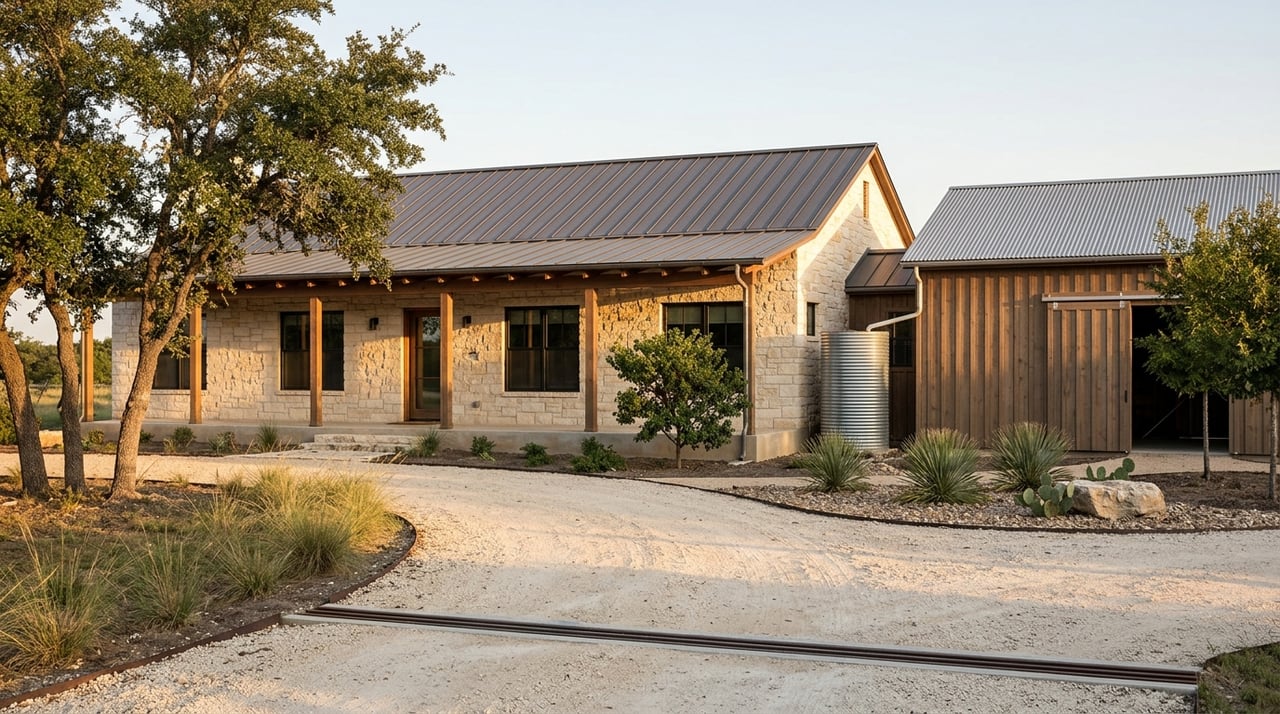
If your ideal getaway includes open skies, workable acreage, and a place that feels more grounded than a crowded subdivision, Blanco County deserves a closer look. You may be searching for a second-home ranch, a manageable recreational property, or a small tract with room to build a long-term land plan. In Blanco County, the appeal is not just the scenery. It is the mix of Hill Country character, regional access, and practical ranch ownership. Let’s dive in.
Why Blanco County fits weekend ranch life
Blanco County offers the kind of setting many weekend buyers want: rural, scenic, and still within reach of major Texas cities. The county had an estimated 2024 population of 13,358 spread across 709.25 square miles of land, which keeps density low at about 16.0 people per square mile. Even with population growth since 2020, it still reads as open country rather than dense development.
That balance matters when you want a place to unplug without feeling completely isolated. The Johnson City District of LBJ National Historical Park sits about 50 miles west of Austin and 60 miles north of San Antonio, which helps frame Blanco County as a realistic weekend destination for buyers coming from either metro. You can have a Hill Country ranch setting without committing to a much longer drive.
Johnson City also supports the county’s weekend-ranch identity in a practical way. Its history is tied to ranching and visitor traffic, and county resources show that many local offices and services are centered there. For you as a buyer, that means the county has a rural feel with a familiar local hub for everyday needs.
Johnson City and Cypress Mill appeal
If you are comparing locations within the county, Johnson City and Cypress Mill each tell a slightly different story. Johnson City offers a county-seat anchor with ranch history and access to local services. Cypress Mill, by contrast, is an unincorporated Hill Country community northeast of Johnson City with a quieter, more rural feel.
That distinction can shape your search. If you want acreage that feels tucked away and less town-centered, areas near Cypress Mill may align better with your goals. If you want easier access to county offices, utilities, and a more established local service base, Johnson City may be a natural starting point.
What a manageable weekend ranch looks like
A good weekend ranch is not always the biggest property on the market. In many cases, it is the tract that matches your time, budget, and intended use. In Blanco County, that usually means focusing on infrastructure, water, and a realistic land-use plan instead of acreage alone.
Blanco County sits in Texas Real Estate Research Center Region 7, the Austin-Waco-Hill Country market. In the fourth quarter of 2024, that region posted a median rural land price of $7,203 per acre and a typical transaction size of 205 acres. That regional snapshot reflects a ranch-oriented market, even though many weekend buyers may prefer smaller, easier-to-manage properties.
For part-time owners, manageable usually means you can maintain the land without turning every weekend into a full-time job. You may want enough acreage for privacy, light agricultural use, and recreation, but not so much that fencing, water systems, and forage work become overwhelming. The right property often feels intentional, not oversized.
Improvements that matter most
In Blanco County, practical improvements often matter more than flashy extras. Local agricultural appraisal guidelines and ranching examples from the LBJ Ranch point to a few recurring priorities.
Key features to look for include:
- perimeter fencing and gates that fit the intended livestock or land use
- ponds, tanks, or other water-capture features
- improved pasture areas and brush management
- a layout that supports regular maintenance and clear use planning
These are not just nice-to-have items. They can shape how usable the property is from day one. A tract with solid fencing, water access, and workable pasture may be easier to enjoy and manage than a larger, raw piece of land that still needs major setup.
Size is only part of the equation
Local appraisal rules make this especially important. Blanco County Appraisal District guidelines say tracts of 10 acres or less are generally treated as residential for agricultural appraisal purposes. They also state that land must be devoted principally to agricultural use at a degree of intensity typical for the area and must have been in agricultural use for at least five of the last seven years.
That means “manageable” does not simply mean “small.” It means the tract supports a use that is practical, documented, and appropriate for the county. If a smaller property is part of your plan, you will want to think carefully about how the land has been used and whether your intended use can stand on its own.
Understand ag valuation before you buy
One of the biggest mistakes acreage buyers can make is assuming agricultural appraisal automatically transfers or continues without much effort. In Texas, agricultural appraisal is tied to qualifying land use, not just ownership. The application is filed with the county appraisal district, and a change to non-agricultural use can trigger rollback taxes.
According to the Texas Comptroller, if land receiving agricultural appraisal changes to a non-agricultural use, the owner owes rollback tax for each of the previous three years in which the land received the lower appraisal. That can become a meaningful cost if you buy land without understanding how it has been classified and what your future plans may do to that status.
For weekend buyers, this is where due diligence matters. Before you close, you will want a clear picture of the current appraisal status, the property’s use history, and what would be required to maintain qualifying use after purchase. A scenic tract may still come with rules that affect your long-term carrying costs.
Wildlife management rules in Blanco County
Wildlife management often comes up in conversations about Hill Country land, but it has specific rules in Blanco County. The county requires an approved written plan, the Texas Parks and Wildlife worksheet, a placement map, yearly documentation, and an update every two years. The guidelines also state that the land must already have a prior agricultural appraisal, and if the tract was subdivided during the previous year, at least 20 acres are required to apply.
This matters because wildlife management is not simply passive ownership. It requires active land management and documentation. If wildlife valuation is part of your long-term vision, you will want to confirm that the tract qualifies and that you are prepared for the recordkeeping involved.
Beekeeping on smaller acreage
For smaller weekend properties, beekeeping may be one of the most practical paths to qualifying agricultural use. Blanco County guidelines say beekeeping can qualify on land between 5 and 20 acres. The county requires at least 6 hives on 5 to 12.99 acres and 8 hives on 13 to 20 acres.
That makes beekeeping especially relevant if you want lighter-touch land use on a smaller tract. It is still a real agricultural activity with local standards, but it can fit properties that are too small for more traditional grazing operations. If your search centers on a compact weekend ranch, this is one of the local rules worth understanding early.
Recreation alone is not enough
Many buyers want a property they can use for hunting, exploring, or simply enjoying the land. That lifestyle absolutely fits Blanco County, but recreation alone does not guarantee agricultural appraisal. County guidelines specifically state that harvesting native plants or hunting native wildlife such as deer or turkey does not qualify by itself for agricultural use.
That does not make a hunting-oriented ranch any less appealing. It just means you should separate lifestyle value from tax treatment. A property can be excellent for recreation and still require a more active land-use plan if you hope to maintain agricultural valuation.
Water and utilities need close review
In Hill Country ranch buying, water is never something to assume. Blanco County groundwater conditions vary by location, and well performance can differ significantly from one tract to the next. The Hill Country Groundwater Conservation District notes that the Trinity aquifer covers most of the county and varies widely by local geology, while the Edwards-Trinity aquifer appears in the west-central part of the county and generally yields lower volumes.
The district also notes that some wells in central Blanco County may have sulfate levels high enough to require treatment. For you, that means water quality, production, storage, and treatment are property-specific questions. A beautiful tract still needs a clear answer on how water will support your household and land use.
Utility access is parcel-specific
Utility access can be just as important as the land itself. Blanco County resources point buyers to PEC for electricity and Frontier and GVTC for communications and internet service in parts of the county. That is a useful reminder that service availability can vary depending on the exact parcel.
Before you buy, it is wise to confirm practical items such as electric service, internet options, and the cost of extending utilities if they are not already in place. Weekend ranch living feels best when the basics work the way you expect them to.
Recreation works best with stewardship
A weekend ranch in Blanco County can support a rewarding outdoor lifestyle, but the strongest properties usually blend recreation with stewardship. Texas Parks and Wildlife shows county-specific hunting seasons for species including white-tailed deer, wild turkey, dove, quail, and squirrel. That creates real recreational appeal for many buyers.
At the same time, Blanco County’s wildlife management standards emphasize active work such as habitat, water, and shelter improvements. That is a helpful lens for ownership in general. The most satisfying weekend ranches are often the ones where enjoyment and land care go hand in hand.
Why local guidance matters
Buying acreage in Blanco County is different from buying a typical residential lot. You may need to evaluate fencing, water sources, pasture condition, utility access, prior land use, and appraisal eligibility all at once. Those details shape both your experience and your long-term costs.
That is why local ranch knowledge matters. A well-chosen property should match the way you actually plan to use it, whether that means a quiet retreat near Cypress Mill, a more service-connected location near Johnson City, or a tract with room for light agricultural use and recreation. In a market like this, the best fit is usually the property that combines Hill Country beauty with a realistic management plan.
If you are considering a weekend ranch in Blanco County, working with a brokerage that understands Hill Country acreage can help you ask better questions before you commit. To explore listings and private ranch opportunities, connect with Fredericksburg Realty.
FAQs
What makes Blanco County a good place for weekend ranch living?
- Blanco County offers a low-density Hill Country setting, access from Austin and San Antonio, a long ranching history, and local hubs like Johnson City that support practical ownership.
What does a manageable weekend ranch in Blanco County usually include?
- A manageable property often includes useful fencing, gates, water features such as ponds or tanks, workable pasture, and a land-use plan that fits the owner’s time and goals.
How does agricultural appraisal work for Blanco County land?
- Agricultural appraisal depends on qualifying land use, local intensity standards, and use history, and a change to non-agricultural use can trigger rollback taxes for the prior three years.
Can a small Blanco County property qualify with beekeeping?
- Yes, Blanco County guidelines say beekeeping can qualify on 5 to 20 acres if the tract meets the county’s hive-count requirements and other applicable standards.
Does hunting alone qualify a Blanco County ranch for ag valuation?
- No, Blanco County states that hunting native wildlife by itself does not qualify land for agricultural use.
What water issues should buyers check on Blanco County ranches?
- Buyers should review well yield, water quality, possible treatment needs, and storage because groundwater conditions vary across the county and by parcel.
Are utilities easy to assume on Blanco County acreage?
- No, utility access is parcel-specific, so you should verify electricity, internet, and any extension needs for the exact property you are considering.