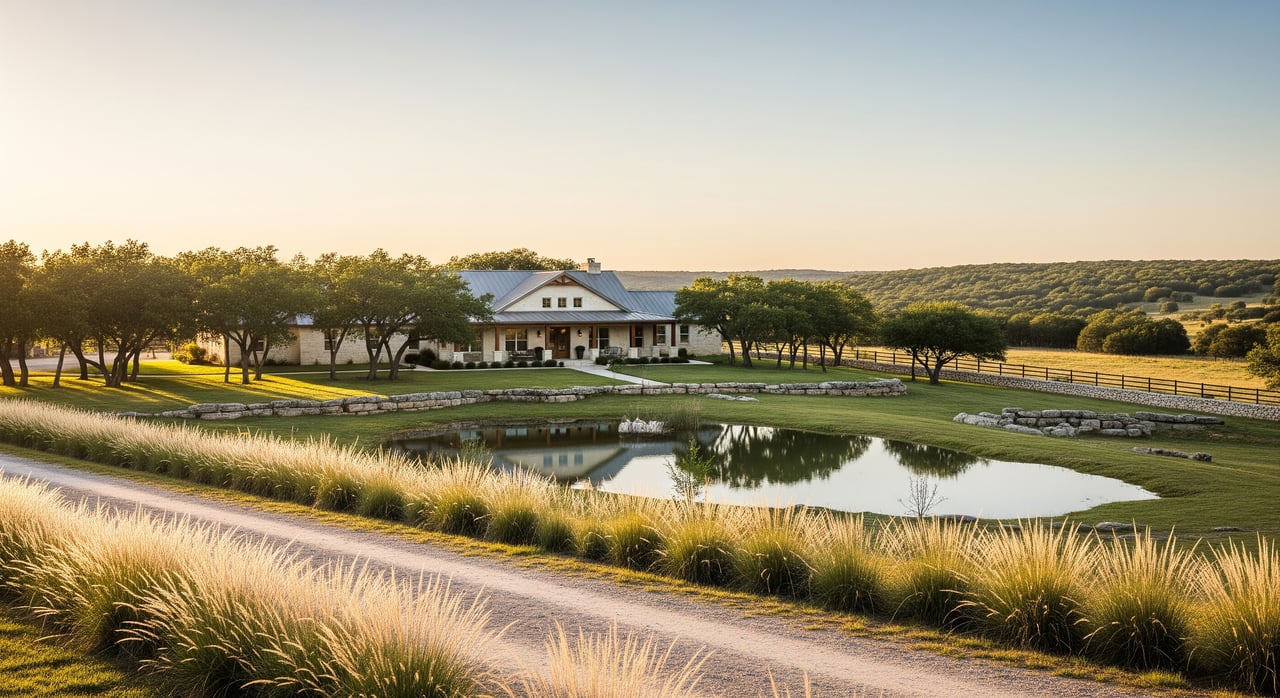
Thinking about buying acreage in Kerr County but worried about hidden issues? You’re smart to pause. Rural properties reward careful buyers, and a little due diligence now can save you time, money, and stress later. In this guide, you’ll learn what to check for water, septic, access, minerals, taxes, infrastructure, and environmental risks, plus who to call and when. Let’s dive in.
Water and wells
Reliable water is the lifeblood of a rural property. In Texas, groundwater use typically follows the rule of capture, and it’s on you to confirm the source, quantity, and quality.
- Confirm the water source: private well, shared well, municipal connection, or surface source like a spring or pond.
- Request well documentation: the drilling log, pump age and type, well depth, static water level, and any pump test or yield data. Ask for maintenance records.
- Test water quality: at minimum, test for total coliform/E. coli, nitrates, total dissolved solids, pH, chloride/sulfate, iron and manganese. Consider arsenic if geology suggests it. If there is oil or gas nearby, add methane or hydrocarbons.
- Verify well siting: measure distance from the septic tank and drainfield and any potential contamination sources.
- Check quantity for your plans: request a multi-hour pump test with drawdown and recovery to confirm sustainable yield for household, irrigation, or livestock.
- Shared well? Obtain a recorded access and maintenance agreement covering rights, costs, repairs, and testing.
- Springs or streams: confirm whether any water appropriation permits exist and what uses are allowed beyond typical domestic needs.
Who to contact: Texas Water Development Board for groundwater information, the county environmental health office for any local well records, and local well drillers for logs and testing.
Septic and soils
Most rural Kerr County homes rely on on-site sewage systems. Hill Country limestone and shallow soils can make placement and performance challenging.
- Gather records: ask for the septic permit, installation date, system type, tank capacity, pump-out and repair history, and a diagram of the tank and drainfield.
- Order inspections: if records are missing or the system is older, require a professional septic inspection. A dye test and camera inspection can reveal leaks or line issues.
- Verify site suitability: before adding bedrooms or building a new home, have a licensed site evaluator or the county environmental office confirm that a compliant drainfield is feasible.
- Review soils: use NRCS soil resources to check depth to bedrock, permeability, and erosion risk. For major builds, consider a geotechnical report.
Who to contact: Kerr County environmental health or permitting for septic records and guidance, TCEQ for statewide OSSF standards, and Texas A&M AgriLife Extension for local best practices.
Title and access
In the country, fences and gates do not always match legal boundaries. A current survey and clear access are essential.
- Order a current survey: request a survey that shows boundaries, improvements, wells, septic, easements, and access. In complex deals, an ALTA/NSPS survey is ideal.
- Confirm ingress and egress: determine if access is via a public county or state road or a private road. For private access, obtain a recorded road maintenance agreement.
- Review road conditions: if you plan construction, confirm that easement roads and bridges can handle heavy trucks and that any right-of-way issues are resolved with Road & Bridge.
- Identify easements and encumbrances: look for utility, pipeline, or conservation easements. Ask about hunting leases or management agreements that could survive closing.
- Understand mineral rights: in Texas, the mineral estate can be severed from the surface. Ask your title company for a commitment that addresses mineral reservations and review county records for leases. Check Texas Railroad Commission records for nearby wells or historic production.
- Check covenants and plats: some rural subdivisions have deed restrictions or POA rules. Confirm any recorded covenants with the County Clerk.
Who to contact: Kerr County Clerk for deeds, plats, and covenants; the title company or a real estate attorney for a title search and insurance; the Texas Railroad Commission for oil and gas records.
Land use and taxes
Tax treatment and permitted uses affect costs and plans. Kerr County’s rural areas may have limited zoning, but other rules still apply.
- Agricultural valuation: many buyers pursue 1-d-1 agricultural or wildlife management appraisal to reduce taxes. Confirm minimum acreage, productivity tests, allowed activities, documentation, and the risk of rollback taxes with the Kerr County Appraisal District.
- Document use early: if you intend to seek an ag or wildlife appraisal, keep records of qualifying activities and coordinate with the appraisal district in advance.
- Development rules: even without municipal zoning, subdivision regulations, septic setbacks, and floodplain rules apply. If the property lies in a city ETJ, additional requirements may apply.
Who to contact: Kerr County Appraisal District for assessments and ag valuation criteria, and Kerr County permits and planning for subdivision and building requirements.
Infrastructure and services
Plan for utilities, road care, and emergency response. These details impact cost, convenience, and insurance.
- Electricity and fuel: identify the electric provider and confirm service history and any extension costs for new lines. Many rural homes use propane for heating and cooking.
- Internet and cell coverage: verify options early. Some areas rely on fixed wireless or satellite rather than fiber or cable.
- Trash and mail: confirm trash pickup availability or hauling costs, and ask USPS about address assignment and delivery points.
- Emergency services: check proximity to volunteer fire departments, available water for firefighting, and response times for EMS and the sheriff.
- Roads and heavy access: if you plan building, confirm load limits, bridge conditions, and who maintains any private roads.
Who to contact: the seller for current providers, Kerr County Road & Bridge, local volunteer fire departments, and county emergency management.
Environmental risks
The Hill Country’s beauty comes with unique natural hazards. Evaluate these early, especially if you plan to build or intensively manage land.
- Flood risk: review FEMA Flood Insurance Rate Maps to see whether any portion lies in the floodplain and whether flood insurance is advisable or required by a lender.
- Karst and topography: limestone terrain can include caves, sinkholes, and shallow soils that affect drainage, foundations, and septic. Cross-check with NRCS soil maps and consider site-specific evaluations.
- Wildfire: brush fuels elevate wildfire risk. Ask local VFDs about defensible space recommendations. Some insurance carriers expect mitigation steps.
- Endangered species: some tracts may include habitats subject to state or federal protections. Coordinate with Texas Parks & Wildlife and the US Fish & Wildlife Service if your project could affect listed species or habitat.
- Past land uses: look for signs of old dumps, fuel storage, oil and gas activity, or agricultural chemicals. Review TCEQ databases for known contamination sites.
Who to contact: FEMA’s map service, NRCS and USGS for soils and topography, Texas Parks & Wildlife and the US Fish & Wildlife Service for habitat guidance, and TCEQ for environmental records.
Inspections and financing
Your financing and insurance can depend on due diligence outcomes. Plan inspections that match your goals.
- Recommended inspections: boundary survey, well inspection and lab water analysis with a yield test, septic inspection and site evaluation, structural inspections for any improvements, and an environmental screening if prior uses are unknown.
- Lender requirements: many lenders require proof of adequate water and sewage, a survey, and compliance with local rules. USDA Rural Development loans and some programs have distance or utility criteria, so confirm eligibility at the start.
- Insurance considerations: verify homeowners coverage early, and check flood or wildfire insurance needs. Distance to fire protection and local risk can affect premiums or availability.
Who to contact: local lenders experienced with rural properties, your title company, and insurance agents familiar with Kerr County.
Due-diligence timeline
A simple structure helps you move from offer to close with confidence.
Pre-offer
- Ask the seller for: survey, well log and pump data, septic permit and records, deed history, recorded covenants or POA documents, tax history, and utility providers.
- Run quick online checks: FEMA flood maps, county GIS, NRCS soils, and Texas Railroad Commission for oil and gas wells near the property.
Option period
- Order: current survey if missing, title commitment, well inspection and lab tests, septic inspection and site evaluation, and structural inspections.
- Contact county offices: verify septic permits, any building or subdivision history, and road maintenance or right-of-way details.
- Get quotes: utilities, internet providers, and insurance carriers.
Before closing
- Clear title issues and confirm recorded access. Resolve easement obligations in writing.
- Verify that agreed repairs or replacements are complete.
- Confirm appraisal and financing contingencies are satisfied.
- If minerals are severed and cannot be cured, consider a price adjustment or a surface-use agreement.
Post-closing
- File homestead or ag and wildlife management applications as applicable.
- Set up utility accounts and renew service agreements.
- Record any well or private road maintenance agreements not already in place.
Red flags to watch
- No recorded legal access or unclear ingress and egress.
- A well with low yield or missing documentation.
- No septic permit or signs of backups or failure.
- Severed mineral estate with active or nearby oil and gas activity.
- Property in a mapped floodplain or with drainage constraints.
- Long response times and limited water for firefighting.
- Restrictive covenants or easements that do not fit your intended use.
- No reliable internet or utility service for your plans.
Local contacts
- Kerr County Clerk: deeds, plats, recorded easements, covenants.
- Kerr County Appraisal District: assessments, exemptions, ag and wildlife valuation rules.
- Kerr County Tax Office: tax payment history and amounts.
- Kerr County Permits and Environmental Health: septic and building permits and records.
- Kerr County Road & Bridge: road maintenance, right-of-way, and load limits.
- Kerr County GIS/Property Maps: parcel lines and aerial imagery.
- Kerr County Emergency Management and local VFDs: fire response and water resources.
- Texas A&M AgriLife Extension (Kerr County): soils, ag practices, septic and well guidance.
- TCEQ, TWDB, Texas Railroad Commission, NRCS, FEMA, US Fish & Wildlife Service, Texas Parks & Wildlife, USDA Rural Development: statewide tools and records relevant to rural due diligence.
When you put it all together, a successful rural purchase in Kerr County comes down to confirming water and septic, securing clean title and recorded access, understanding minerals and easements, and aligning taxes and land use with your goals. If you want a steady hand through the process, our team brings deep Hill Country experience and specialist ranch know-how to the table. Connect with Fredericksburg Realty to map your due diligence and find the right tract.
FAQs
How can I verify a Kerr County well is reliable?
- Ask for the drilling log and a recent pump test showing sustained yield and recovery. Order independent lab testing for quality and consider retesting after any treatment.
Who maintains a private road that serves a property?
- Maintenance depends on recorded easements, plats, or road agreements. If none exist, negotiate and record a road maintenance agreement before closing.
What happens if mineral rights are severed from the surface?
- A separate mineral estate can allow exploration or production that affects surface use. Get a title opinion, check for active leases, and consider a surface-use agreement.
Can I qualify for an agricultural or wildlife tax valuation right away?
- It depends on local requirements and historical use. Contact the Kerr County Appraisal District early to understand documentation needs and possible rollback taxes.
What are the biggest due-diligence red flags on rural land?
- Missing legal access, inadequate or undocumented water, failing septic, severed minerals with active leases, floodplain or karst constraints, and restrictive easements or covenants that conflict with your plans.