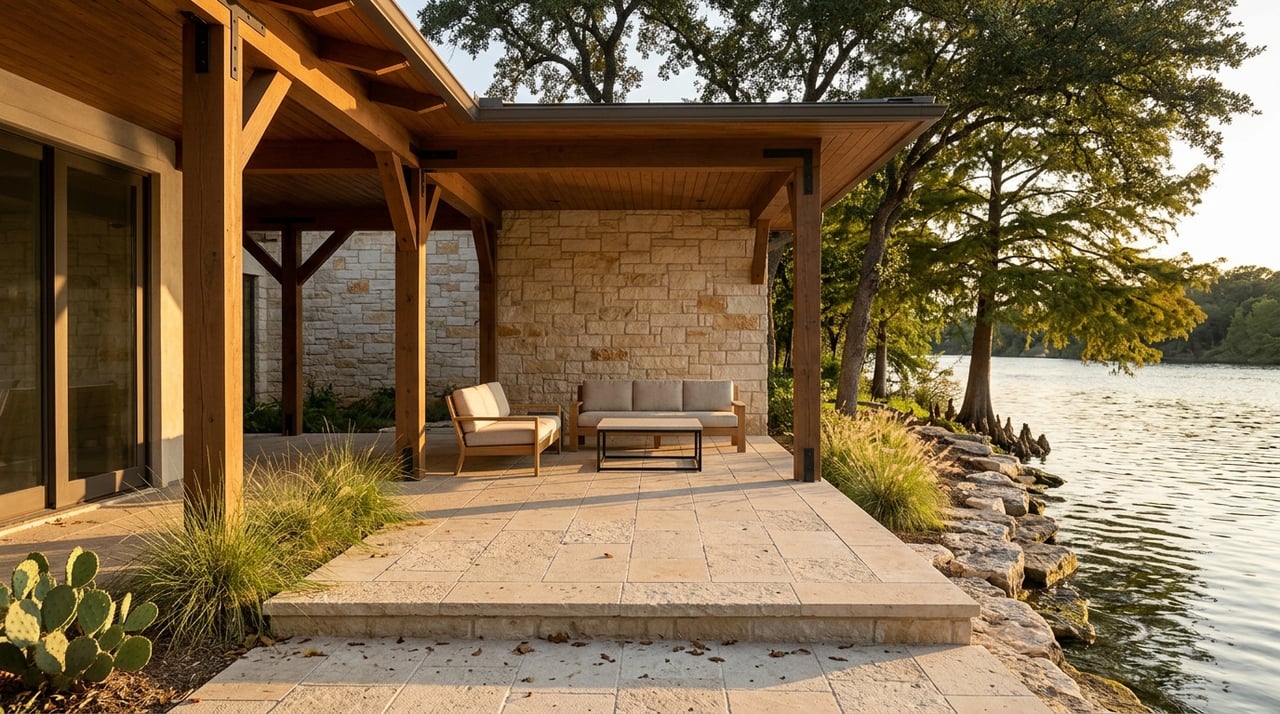
If you picture a river property as nothing but a pretty view, you may miss the details that matter most. Buying along the Guadalupe River in Kerr County can offer scenery, recreation, and a true Hill Country lifestyle, but it also calls for careful review of access, floodplain status, utilities, and deeded rights. When you know what to verify before you make an offer, you can shop with more confidence and fewer surprises. Let’s dive in.
Why buyers look along the Guadalupe
Kerr County sits in the Edwards Plateau and is shaped by the Guadalupe River and its tributaries. That geography gives the Kerrville, Ingram, and Hunt corridor much of its identity, from river views to water-based recreation and the laid-back rhythm many buyers want in a Hill Country property.
The appeal is not just visual. Texas Parks and Wildlife describes the Kerr County segment of the Guadalupe as Texas’s top recreational river and its second-ranked scenic river, with strong use by canoeists, kayakers, and tubers. In Kerrville, the river corridor also includes public parks, fishing areas, boat access, swimming spots, and the six-mile River Trail.
That means buyers are often drawn here for a mix of lifestyle and long-term value. You may be looking for a weekend retreat, a second home, a full-time residence, or a property with more land and privacy, but in every case, the river itself tends to be a major part of the draw.
What property types you may find
Kerrville river-area homes
In Kerrville, many buyers focus on homes that are near the river corridor, parks, and trail system. Some of these properties are directly on the water, while others offer a river-centered lifestyle through proximity rather than private frontage.
That distinction matters. A home near public access points, parks, and the River Trail may still deliver the experience you want without the same site constraints that sometimes come with direct river frontage.
Ingram and Hunt river properties
Ingram and Hunt have long-standing river-town identities. These areas are often associated with cottages, cabins, vacation homes, guest-ranch settings, and other properties tied to seasonal or recreational use.
If you are shopping in Hunt in particular, you may see properties that feel more resort-like or retreat-oriented. The setting near the North and South Forks of the Guadalupe adds to that appeal, especially for buyers prioritizing scenery, privacy, and a strong outdoor connection.
Acreage in unincorporated Kerr County
Farther outside town, you may find larger acreage and ranch-style tracts. These properties can offer more room, more privacy, and a different buying process than an in-town home.
In many of these areas, buyers should expect more questions about septic systems, wells, road access, easements, and site planning. Rural river-area buying often involves more due diligence than a typical neighborhood purchase with city utilities.
River access is not always what it seems
One of the biggest mistakes buyers can make is assuming that river frontage and river access mean the same thing. They do not always.
Texas Parks and Wildlife notes that public access to navigable rivers is usually obtained from public property, such as a road crossing, boat launch, or other public land. There is no general right to cross private property to reach a navigable stream, which means a property near the river may not come with the kind of access you imagined.
Before you move forward, confirm whether the property offers:
- Private river frontage
- Shared access through an easement or common area
- Nearby public access only
- No practical river access despite a river-area location
That is why recorded documents matter so much. The deed, plat, survey, and any recorded easements are the best place to verify what actually comes with the property.
Deeds, plats, and access details to review
Kerr County points buyers to the county clerk’s records for exact information on deeds, plats, surveys, and recorded easements. If you are buying along the river, that review is not optional. It is one of the most important parts of the process.
You will want to understand whether the property has any restrictions or physical limits that affect how you can use it. This can include setbacks, utility easements, deed restrictions, plat restrictions, HOA rules, right-of-way issues, and driveway access requirements.
For properties in unincorporated Kerr County, there is another wrinkle. The county notes that it does not have a building permit or certificate-of-occupancy system in the unincorporated area and has no zoning restrictions under its subdivision rules, but that does not mean a parcel is free of limitations. Site-specific restrictions can still shape what you can build, where you can place improvements, and how you can access the property.
If a property will need new or altered access from a county-maintained road, a driveway permit is required. That makes early site review especially important for land, river cabins, and larger tracts.
Floodplain review should happen early
Along the Guadalupe River, floodplain review is essential. This is one of the first things to check, not something to save for later.
Kerr County’s engineer notes that much of the county’s mapped floodplain is in Zone A. In practical terms, that means some areas do not have a detailed engineering study or flood elevations shown on the map. So if you are comparing river properties, one home or tract may be much easier to evaluate than another.
The official starting point for flood-hazard maps is FEMA’s Flood Map Service Center. For properties in unincorporated Kerr County, buyers should also determine whether a floodplain development permit may be required. For properties inside Kerrville city limits, the city provides its own floodplain information and development resources.
When you review a property, ask these questions early:
- Is the structure or lot in a mapped floodplain?
- Is it in the floodway or a Zone A area?
- Who is the local floodplain administrator for this property?
- Could floodplain status affect future building, remodeling, or expansion plans?
These answers can influence insurance costs, financing, and even whether a property fits your long-term goals.
Flood insurance and financing questions
Flood risk is not just a map issue. It also affects how you finance and insure the property.
A standard homeowners policy typically does not cover flood damage. Buyers should ask lenders early whether the property falls in a Special Flood Hazard Area and whether the loan will require flood insurance.
It also helps to ask whether an elevation certificate or map change could affect the flood determination, and whether the lender will consider different flood insurance options. In some cases, lenders may require flood coverage even outside the highest-risk mapped areas.
For river-area buyers, this is one of the easiest ways to avoid last-minute surprises. If you understand the insurance picture upfront, you can make a more informed offer and budget more accurately.
Water use rights are worth clarifying
Another common assumption is that owning land next to the river means you automatically have broad rights to use that water. In Texas, that is not something you should assume.
The Texas Commission on Environmental Quality states that surface water is owned by the state and held in trust for the public. In general, using surface water requires state permission unless a specific statutory exemption applies.
For a buyer, the practical takeaway is simple. If a property touches the Guadalupe River, that does not automatically mean you can divert, impound, or otherwise use river water however you want. If water use is important to your plans, review the deed, any permits, and the exact intended use before moving forward.
Septic and well questions in rural areas
If you are looking beyond city-served areas, septic and well issues often become part of the decision. This is especially true for cabins, second homes, small acreage, and larger rural tracts.
Texas requires on-site sewage facilities, or OSSFs, to be based on a site evaluation, and most systems need a permit before construction or repair. Kerr County’s Environmental Health Department oversees OSSF installation under state rules and provides applications and buyer-seller materials related to septic systems.
For wells, the Headwaters Groundwater Conservation District registers and permits wells drilled in Kerr County. If a property relies on a private well or may need one in the future, that should be part of your due diligence, especially on land or improved acreage.
Before you buy, ask:
- Does the property use an on-site sewage system?
- Is there permit information available for the septic system?
- Was the system designed for the current home size and use?
- Does the property have a private well?
- Will any future improvements trigger additional well or septic review?
A smart buyer checklist for Guadalupe properties
When you are comparing properties along the Guadalupe River in Kerr County, it helps to keep a short, practical checklist in front of you.
Verify the lifestyle details
Make sure the property matches how you plan to use it.
- Direct frontage versus nearby access
- Full-time home versus second-home setup
- In-town convenience versus rural privacy
- Trail, park, or recreation proximity
Verify the legal and site details
Make sure the property works on paper, not just in photos.
- Deed review
- Plat and survey review
- Easements and setbacks
- Road access and driveway permit needs
- HOA or deed restrictions
Verify the risk and utility details
Make sure you understand the costs and constraints.
- Floodplain and floodway status
- Flood insurance requirements
- Septic permitting and condition
- Well registration or permit needs
- Future building or expansion feasibility
Why local guidance matters
River properties often look simple at first glance. In reality, they can involve several moving parts at once, especially when you are balancing frontage, access, floodplain considerations, insurance, and rural utility questions.
That is where local market knowledge matters. In a place like Kerr County, the difference between a strong river-area purchase and a frustrating one often comes down to careful review of the documents, the site, and the property’s fit with your goals.
If you are considering a home, cabin, or acreage purchase along the Guadalupe, it helps to work with a brokerage that understands both the Hill Country lifestyle and the technical side of land and river-oriented buying. To start your search with a team that values stewardship, clarity, and local expertise, connect with Fredericksburg Realty.
FAQs
What should you verify before buying along the Guadalupe River in Kerr County?
- You should verify river access, deeded rights, floodplain status, easements, setbacks, road access, and whether the property relies on septic or a well.
Does river frontage in Kerr County guarantee private Guadalupe River access?
- No. A property near or on the river does not automatically guarantee unrestricted private access, so you should confirm access through the deed, plat, survey, and any recorded easements.
Are Guadalupe River properties in Kerr County always in a flood zone?
- Not always, but floodplain review is essential because many river-area properties may be affected by mapped flood hazards, including Zone A areas.
Do rural river properties in Kerr County need septic or well review?
- Yes. Many properties outside city-served areas may rely on an on-site sewage system, a private well, or both, so permit and registration questions should be reviewed early.
Can you use water from the Guadalupe River if your Kerr County property touches the river?
- Not necessarily. In Texas, surface water is owned by the state, so you should not assume river frontage gives you automatic rights to divert or use river water without further review.